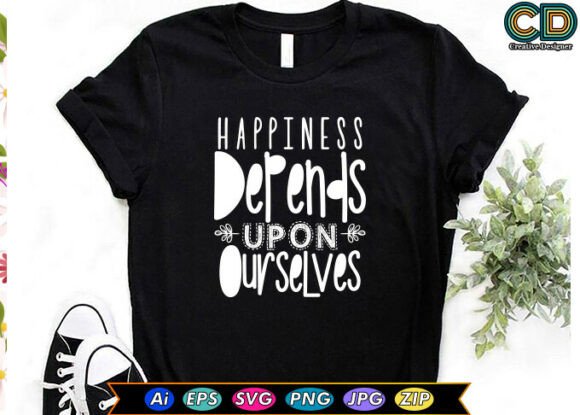
Happiness Depends Upon Ourselves
A Designer’s First Look: Calm, Clear, and Quietly Confident
When Happiness Depends Upon Ourselves landed in my inbox, I paused—not because it shouted, but because it breathed. As an embroidery designer who tests hundreds of text-based graphics each year, I’ve learned to trust that quiet confidence. This isn’t a flashy slogan or a trendy phrase; it’s a grounded, serif-leaning statement with gentle spacing and balanced weight. It feels like something you’d stitch onto a linen tea towel for a friend recovering from burnout—or embroider in soft ecru thread on a charcoal sweatshirt for a boutique’s slow-living collection. The layout is horizontal, centered, and uncluttered—no flourishes, no extra icons, no decorative borders. That simplicity is its strength—and its first real test.
Real-World Use: From Tote Bag to Nursery Pillow
Last week, I prepped Happiness Depends Upon Ourselves for a custom order: a set of three embroidered cotton tote bags for a local wellness studio. I chose a medium-weight canvas, medium tear-away stabilizer, and matte poly thread in oat and slate. On the hoop, the design flowed cleanly—no crowding, no awkward kerning. The letterforms held their shape through satin-stitched outlines and smooth fill areas, even at 4.2 inches wide. Later, I stitched it on a baby-knit onesie (with lightweight cutaway + topping) and a textured linen pillow cover (using a slightly denser fill stitch). In both cases, the message remained legible and serene—not stiff, not fragile. That’s rare for text-only designs at this scale. It doesn’t scream “gift”—it invites quiet appreciation. Perfect for mindful brands, therapist offices, yoga studios, or handmade shops building intentional product lines.
Where It Shines—and Where to Pause
Happiness Depends Upon Ourselves works beautifully on stable, mid-weight fabrics: cotton twill, fleece-backed sweatshirts, structured totes, tea towels, and denim jackets. It translates well to embroidered patches (especially when backed with heat-seal adhesive) and holds up across holiday embroidery projects—think velvet stockings or linen napkins for Thanksgiving gifting. As a T-Shirt Designs asset, it performs best on crewnecks and relaxed tees with flat seams; avoid high-stretch performance knits unless you add significant stabilization and reduce stitch density manually.
Use caution on: curved surfaces like caps (the straight line won’t wrap naturally), ultra-thin voile or silk (letterforms may shadow or distort), dark fabrics with light thread (check contrast in your printable mockup first), and layered garments like quilted jackets (test hoop clearance). Also note: while the design reads clearly at 3.5–5 inches, going smaller than 3 inches risks losing definition in the serifs—so skip it for tiny hat brims or baby cap fronts unless you’re willing to simplify the font manually.
Design Assets That Build Trust
What makes Happiness Depends Upon Ourselves more than just another Graphics download? It carries tonal consistency. Customers don’t buy slogans—they buy resonance. When someone sees this stitched cleanly on a handmade apron at a craft fair, they sense intention, not algorithm. That elevates perceived value, supports brand consistency for small shop owners, and deepens buyer engagement—especially among thoughtful buyers who seek meaning over mass production. For Etsy sellers, it’s a low-risk, high-signal addition: minimal thread cost, strong emotional hook, and easy to pair with neutral palettes in listing photos.
Practical Notes Every Embroidery Designer Should Check
- Test on scrap fabric first—especially if stitching on textured or stretchy material. What looks crisp in an AI file may soften or blur mid-stitch.
- Review stitch density in your embroidery software. Dense fills can overwhelm lightweight fabrics; open running-stitch alternatives may suit baby items better.
- Confirm hoop size compatibility. The design’s width matters more than height—make sure your machine’s max hoop width accommodates it comfortably.
- Inspect small details in the editable SVG or AI file. Are serifs clean? Is spacing consistent between “U” and “P”? Zoom in—you’ll spot potential digitizing hiccups before hooping.
- Try black-and-white mockups. Does it retain impact on both light and dark backgrounds? I found it especially strong on heather grey and natural linen.
- Use proper stabilizer: medium cutaway for knits, tear-away for stable wovens, and topping for napped or textured surfaces.
- Verify licensing before selling finished products or bundling the digital embroidery file. The product description lists editable formats (AI, SVG, EPS, JPG) but doesn’t specify commercial use rights—always double-check before scaling as a craft business or digital product seller.
Final Thought: A Design That Doesn’t Try Too Hard
As a reviewer who’s seen countless “inspirational quote” embroidery files—some over-digitized, some under-tested, many forgettable—Happiness Depends Upon Ourselves stands out by doing less. Its restraint gives it versatility. It fits equally well on a therapist’s waiting-room pillow and a teen’s personalized hoodie. It reads as handmade without looking amateurish. It supports a story rather than demanding attention. That’s the mark of a mature machine embroidery design: it serves the product, the person, and the purpose—quietly, reliably, and with grace. If you’re curating design assets for custom apparel, embroidered patches, or small shop merchandise, this one earns shelf space. Just remember: let the message breathe, match your thread to your fabric’s soul, and always—always—stitch a test run first.